
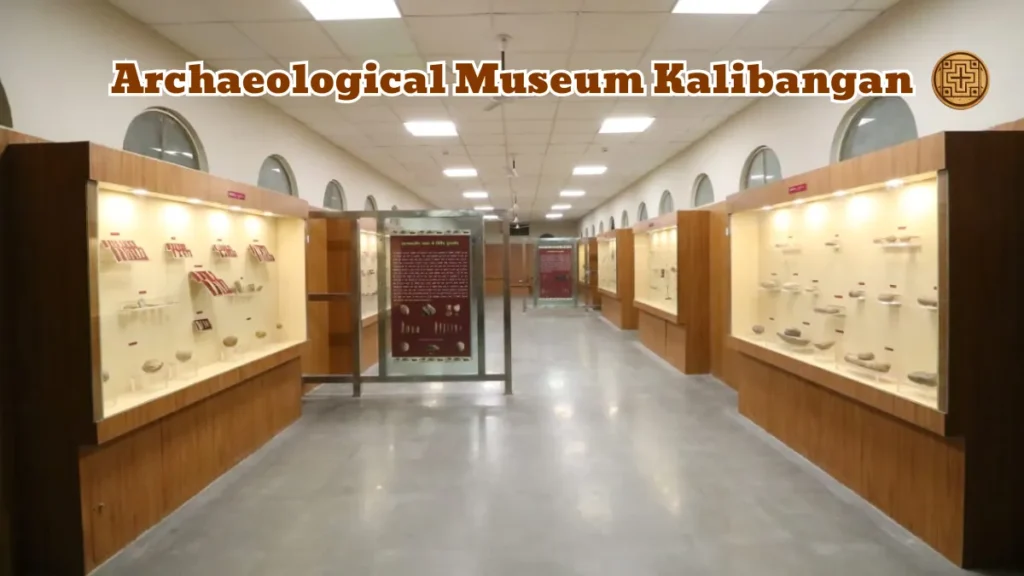
A Historic Museum Preserving One of India’s Oldest Civilizations
The Archaeological Museum Kalibangan, located in Rajasthan’s Hanumangarh district, stands as one of India’s most important centers for understanding the Indus Valley Civilization. Situated around eight kilometers south of Pilibangan town, the museum preserves and showcases invaluable discoveries unearthed from the ancient Harappan site of Kalibangan, a settlement that played a major role in the early urban development of the Indian subcontinent.
The museum was originally established in 1985 by the Archaeological Survey of India (ASI) to display artifacts recovered during extensive excavations carried out between 1961 and 1969. After undergoing modernization and reorganization, the institution reopened to visitors on May 18, 2017, marking World Museum Day with a renewed focus on heritage preservation and public education.
Today, the Archaeological Museum Kalibangan attracts historians, archaeologists, researchers, students, and travelers interested in the roots of South Asian civilization. Through carefully curated galleries filled with pottery, tools, ornaments, terracotta objects, burial remains, and evidence of early agriculture, the museum offers a detailed look into a civilization that flourished thousands of years ago.
Where Is the Archaeological Museum Kalibangan Located?
The museum is located in Kalibangan village in Rajasthan’s Hanumangarh district. The site lies near the dried bed of the ancient Ghaggar River, which many historians associate with the Saraswati River mentioned in ancient Indian texts.
Visitor Information
- Museum Name: Archaeological Museum Kalibangan
- Location: Kalibangan, District Hanumangarh, Rajasthan, India
- Distance from Pilibangan: Approximately 8 kilometers
- Opening Hours: 10:00 AM to 5:00 PM
- Entry Fee: ₹5
- Managed By: Archaeological Survey of India (ASI)
- Contact: circlejai.asi@gmail.com
The museum’s affordable ticket price and educational exhibits make it an accessible destination for both tourists and academic visitors.
Why Kalibangan Matters in Indian History
Kalibangan is widely regarded as one of the most significant Harappan archaeological sites discovered in India after Independence. The ancient settlement provides crucial evidence about urban planning, agriculture, trade, craft production, burial customs, and religious practices during both the Early Harappan and Mature Harappan phases.
The archaeological site was first identified in 1952 by renowned archaeologist Amlanand Ghosh. Excavations later conducted under the leadership of Prof. B. B. Lal, B. K. Thapar, and J. P. Joshi revealed an advanced civilization that existed long before many classical civilizations emerged elsewhere in the world.
The discoveries at Kalibangan helped historians better understand how the Indus Valley Civilization expanded across northwestern India and Pakistan.
Discovery of the Indus Valley Civilization
The Indus Valley Civilization first came to global attention in the early 1920s after major excavations at Harappa and Mohenjo-daro, both located in present-day Pakistan. Archaeologists Daya Ram Sahni and R. D. Banerji conducted these excavations under the supervision of Sir John Marshall.
Following the Partition of India in 1947, many of the major Harappan sites became part of Pakistan. This encouraged Indian archaeologists to intensify surveys across northern and western India in search of additional Harappan settlements.
These explorations led to the discovery of several important sites including Kalibangan in Rajasthan, Banawali and Rakhigarhi in Haryana, Lothal and Dholavira in Gujarat, and Alamgirpur in Uttar Pradesh.
Among these, Kalibangan quickly gained prominence because of its exceptionally preserved settlement pattern and unique agricultural evidence.
The Importance of the Ghaggar River Region
Ancient Kalibangan developed on the banks of the now-dry Ghaggar River. Many scholars believe this river system once supported flourishing agricultural communities due to seasonal flooding and fertile soil.
The river’s presence likely contributed to the growth of organized settlements in the region. Archaeological findings suggest that residents practiced advanced farming methods, maintained structured urban layouts, and engaged in craft production and trade activities.
The drying of river systems in the region is considered one of the possible factors behind the eventual decline of Harappan settlements in northwestern India.
Excavations at Kalibangan
Excavation work at Kalibangan was conducted over nine seasons between 1961 and 1969 by the Archaeological Survey of India.
Researchers uncovered evidence belonging to two major cultural phases:
- Early Harappan Culture (circa 3000–2700 BCE)
- Mature Harappan Culture (circa 2600–1900 BCE)
The excavation site included multiple mounds representing different settlement phases:
- KLB-1: Early Harappan settlement
- KLB-2: Mature Harappan settlement
- KLB-3: Additional Mature Harappan remains
- KLB-8: Cemetery and burial area
These excavations transformed Kalibangan into one of the most valuable archaeological sites in South Asia.
Inside the Archaeological Museum Kalibangan
The museum is divided into three major galleries, each focusing on different aspects of Harappan life and culture.
First Gallery: Early Harappan Life and Culture
The first gallery primarily focuses on objects belonging to the Early Harappan and early stages of the Mature Harappan civilization.
Visitors entering this section immediately notice the remarkable diversity of pottery styles, terracotta toys, tools, and domestic objects that provide insight into everyday life nearly 5,000 years ago.
Early Harappan Pottery
One of the most important attractions in this gallery is the display of Early Harappan pottery classified into six distinct categories known as Fabrics A to F.
These pottery types are categorized based on:
- Shape
- Texture
- Surface treatment
- Decorative style
- Manufacturing technique
The pottery was produced using fast wheels and fired at high temperatures, indicating advanced ceramic technology.
Fabric A Pottery
Fabric A pottery is generally light, thin, and pinkish-red in color. Decorative motifs painted in black and occasionally white include:
- Fish
- Bulls
- Deer
- Ducks
- Floral patterns
- Horizontal bands
- Triangular motifs
These designs reveal the artistic sensibilities of the Harappan people.
Fabric B Pottery
Fabric B vessels display carefully applied red slip coatings and black-painted designs. Many pieces include naturalistic imagery such as:
- Bulls
- Birds
- Floral decorations
The craftsmanship indicates a well-developed pottery tradition.
Fabric C to F Pottery
Other fabric categories demonstrate variations in texture, slip color, decorative patterns, and firing techniques. Some include grey pottery painted with white pigment, while others feature crisscross patterns, loops, wavy lines, and geometric designs.
The pottery collection collectively demonstrates the technological sophistication of Early Harappan communities.
Terracotta Objects and Toys
The gallery also displays numerous terracotta artifacts that reflect daily life, entertainment, and religious practices.
Among the objects exhibited are:
- Toy carts
- Miniature ploughs
- Animal figurines
- Human figurines
- Feeding cups
- Whistles
- Rattles
- Wheels
- Sling balls
- Hopscotch pieces
- Terracotta cakes
These artifacts suggest that Harappan society had organized domestic life and a vibrant craft tradition.
Animal and Bird Figurines
Particularly notable are the terracotta representations of animals and birds including:
- Bulls
- Dogs
- Cats
- Camels
- Ducks
- Sparrows
- Eagles
- Parrots
- Pigeons
These figurines may have served educational, decorative, ritualistic, or entertainment purposes.
Stone and Copper Objects
The first gallery also houses early stone and copper tools such as:
- Chert blades
- Saddle querns
- Stone beads
- Copper rings
- Arrowheads
- Copper beads
These discoveries indicate that Kalibangan residents possessed advanced knowledge of metallurgy and stone tool production.
Second Gallery: Mature Harappan Pottery and Artistic Expression
The second gallery focuses on artifacts from the Mature Harappan period, considered the peak phase of the Indus Valley Civilization.
This section highlights the evolution of pottery styles, symbolic markings, and decorative traditions.
Painted Pottery and Graffiti Marks
The gallery showcases beautifully painted pottery fragments including:
- Bowls
- Goblets
- Beakers
- Dishes on stands
- Miniature pots
- Lids
- Perforated vessels
Most vessels were decorated using black paint over a red surface.
Common Harappan Designs
Popular decorative themes include:
- Fish motifs
- Geometric patterns
- Diamonds
- Squares
- Crisscross lines
- Dots and circles
- Floral motifs
- Animal imagery
Some pottery pieces also contain graffiti symbols believed to be associated with the Harappan script.
These markings continue to fascinate researchers because the Indus script remains undeciphered despite decades of study.
Large Storage Jar
One of the most striking objects in this gallery is a large earthen storage jar displayed at the center.
The size of the vessel suggests large-scale storage practices, possibly related to grain preservation, trade, or community distribution systems.
Its presence reflects the organized economic life of Harappan settlements.
Third Gallery: Tools, Ornaments, and Burial Evidence
The third gallery presents objects connected to trade, craftsmanship, personal adornment, and ritual practices.
This section offers visitors a closer understanding of the social and cultural sophistication of Harappan communities.
Copper Tools and Weapons
Important copper artifacts displayed in this gallery include:
- Axes
- Blades
- Knives
- Spearheads
- Arrowheads
- Rods
- Needles
- Hairpins
- Mirrors
The variety of objects demonstrates the extensive use of metal tools in daily life.
Some items appear linked to hunting and defense, while others were likely used for domestic or cosmetic purposes.
Semi-Precious Stone Beads
One of the gallery’s highlights is its collection of beads crafted from semi-precious stones such as:
- Carnelian
- Agate
- Jasper
- Steatite
- Faience
- Lapis Lazuli
These beads reveal the Harappans’ expertise in bead-making and long-distance trade networks.
The presence of stones like lapis lazuli suggests connections with regions far beyond present-day India.
Terracotta Necklace and Shell Buttons
The museum also preserves ornaments including:
- Terracotta necklaces
- Shell buttons
- Bangles
- Decorative beads
These artifacts provide evidence of personal grooming and fashion in Harappan society.
Measuring Tools and Scientific Knowledge
Displayed objects such as plumb bobs, measuring scales, and standardized weights indicate that Harappans possessed advanced systems of measurement and urban planning.
Standardization was one of the defining characteristics of the Indus Valley Civilization.
Replica of Skeletal Remains
A replica of skeletal remains discovered at burial site KLB-8 is displayed in the museum courtyard.
This exhibit helps visitors understand ancient burial customs and funerary traditions practiced thousands of years ago.
Kalibangan’s Early Harappan Settlement
Archaeologists discovered that the Early Harappan settlement at Kalibangan was fortified and carefully planned.
The settlement measured approximately:
- 250 meters north-south
- 180 meters east-west
Its defensive walls were constructed using mud bricks with standardized proportions.
Excavations revealed multiple construction phases, showing that the settlement evolved over time.
Houses and Urban Layout
Homes in the Early Harappan settlement typically contained:
- Three or four rooms
- Central courtyards
- Mud-brick walls
The consistent brick sizes suggest standardized construction methods.
Archaeologists believe the settlement may have been abandoned after a major earthquake around 2700 BCE.
The World’s Earliest Known Ploughed Field
One of Kalibangan’s most extraordinary discoveries was an ancient ploughed agricultural field.
Located southeast of the settlement, the field showed intersecting furrows arranged in a cross pattern.
This find is considered one of the earliest archaeological examples of ploughed agriculture anywhere in the world.
Evidence of Ancient Farming
Artifacts and botanical evidence indicate that Kalibangan residents cultivated crops such as:
- Wheat
- Barley
- Rice
- Peas
- Gram
Researchers believe agriculture depended heavily on seasonal monsoon rainfall.
The discovery of terracotta plough models provides further evidence of farming practices.
Mature Harappan Kalibangan: An Organized Urban Center
After a gap of roughly one century, the site was reoccupied by Mature Harappan communities.
This new settlement displayed a more sophisticated urban layout divided into:
- A western citadel
- An eastern lower town
The city was protected by fortification walls and organized using a grid-based street system.
Fire Altars and Ritual Structures
Excavators discovered a series of fire altars built on elevated platforms within the citadel area.
These structures have generated significant academic interest because they may indicate ritualistic or ceremonial practices.
The presence of wells and bathing platforms further suggests organized civic planning.
Burial Site KLB-8 and Harappan Funeral Traditions
The cemetery area at Kalibangan, identified as KLB-8, lies southwest of the main settlement.
Archaeologists identified three different burial types:
Extended Burials
Bodies were placed in north-south oriented graves, typically with the head facing north.
Pot Burials
These burials involved pottery placed inside circular pits without skeletal remains.
Symbolic Burials
Some graves contained pottery and ritual objects but no human remains.
These burial practices provide important clues about Harappan spiritual beliefs and social customs.
Why the Archaeological Museum Kalibangan Is Important Today
The Archaeological Museum Kalibangan serves as more than just a collection of ancient objects. It acts as an educational institution that preserves evidence of one of humanity’s earliest urban civilizations.
The museum helps modern audiences understand:
- Early town planning
- Agricultural innovation
- Ancient craftsmanship
- Trade systems
- Ritual practices
- Scientific measurement systems
Its collections demonstrate that the people of the Indus Valley Civilization possessed remarkable organizational and technological abilities long before many later civilizations emerged.
Also Read: History of Kalibangan: Exploring Rajasthan’s Ancient Harappan Civilization
Tourism and Heritage Awareness
In recent years, heritage tourism in Rajasthan has expanded beyond forts and palaces to include archaeological destinations.
Kalibangan has become increasingly important for:
- Educational tours
- Archaeological research
- Cultural tourism
- Historical studies
Experts believe greater public awareness and infrastructure development could further strengthen the site’s importance in India’s heritage tourism sector.
Challenges in Preservation
Like many archaeological sites, Kalibangan faces challenges related to:
- Environmental damage
- Soil erosion
- Urban expansion
- Limited public awareness
Conservation experts stress the importance of continued preservation efforts, scientific documentation, and responsible tourism.
Museums such as the Archaeological Museum Kalibangan play a critical role in protecting fragile historical evidence for future generations.
A Living Connection to India’s Ancient Past
The Archaeological Museum Kalibangan remains one of Rajasthan’s most valuable cultural institutions. Through its carefully preserved artifacts and historical displays, it offers a rare opportunity to explore the daily lives, technologies, beliefs, and achievements of the Harappan people.
From terracotta toys and painted pottery to ancient farming evidence and burial practices, every object inside the museum contributes to the broader story of human civilization in the Indian subcontinent.
For historians and travelers alike, Kalibangan is not merely an archaeological site-it is a living connection to a civilization that helped shape the foundations of urban culture in South Asia thousands of years ago.