
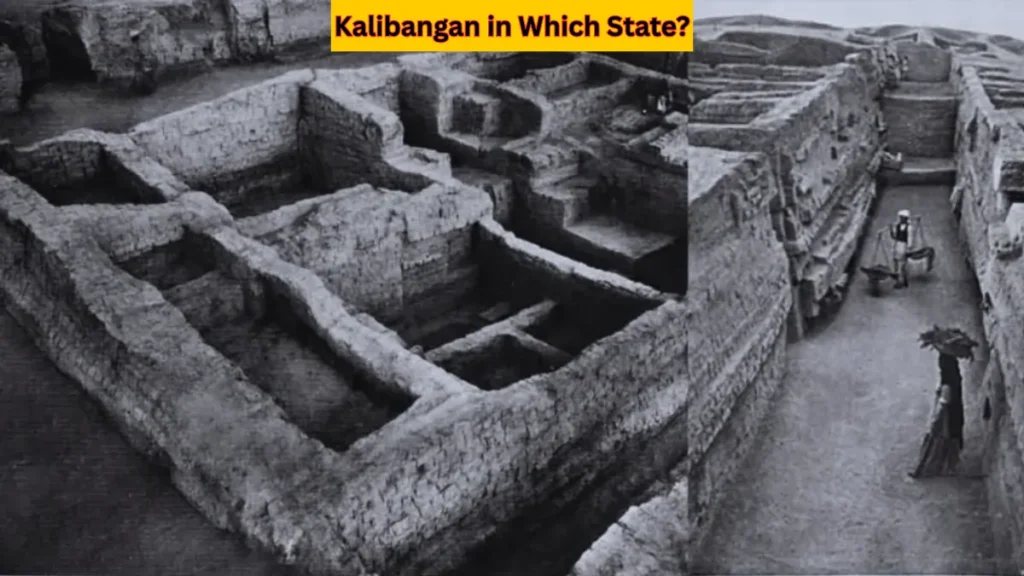
Kalibangan in which state? Kalibangan is located in the Indian state of Rajasthan, in the Hanumangarh district. It is one of the most important archaeological sites of the Indus Valley Civilization and attracts historians, archaeologists, students, and travelers from across the world. The ancient city offers valuable evidence about one of the world’s earliest urban civilizations and provides a fascinating glimpse into life more than 4,000 years ago.
If you are wondering where Kalibangan is located, why it is famous, and what makes it special, this detailed guide covers everything you need to know.
Kalibangan in Which State?
The answer to the question “Kalibangan in which state” is simple: Kalibangan is situated in Rajasthan, India. It lies in the Hanumangarh district on the southern bank of the ancient Ghaggar River, which many scholars associate with the legendary Saraswati River mentioned in ancient Indian texts.
Kalibangan is approximately 205 kilometers from Bikaner and around 310 kilometers from Jaipur. Today, it is recognized as one of the most significant archaeological destinations in northern India.
The name “Kalibangan” comes from two Hindi words. “Kali” means black, while “Bangan” means bangles. During excavations, archaeologists discovered numerous black-colored bangles at the site, giving the ancient settlement its present-day name.
History of Kalibangan
Kalibangan has a history dating back nearly 5,000 years. It was one of the major cities of the Indus Valley Civilization, also known as the Harappan Civilization.
The site was first identified after India’s Independence during archaeological surveys. Large-scale excavations were conducted by the Archaeological Survey of India between 1960 and 1969 under the leadership of renowned archaeologist B. B. Lal and his team.
Excavations revealed that Kalibangan had two distinct cultural phases:
Pre-Harappan Phase
The earliest settlement belonged to the Pre-Harappan period. During this phase, people lived in mud-brick houses surrounded by defensive walls. They practiced agriculture and developed an organized community long before the mature Harappan civilization emerged.
Mature Harappan Phase
Later, Kalibangan became a flourishing Harappan city with planned streets, drainage systems, residential areas, wells, and public spaces. The city reflected advanced urban planning similar to other famous Indus Valley cities such as Harappa and Mohenjo-daro.
Why Is Kalibangan Famous?
Kalibangan is famous for several remarkable discoveries that have helped historians understand ancient Indian civilization.
One of its greatest discoveries is the world’s oldest known ploughed agricultural field. Archaeologists found clear evidence of crisscross furrows used for farming. This finding proves that organized agriculture was practiced thousands of years ago.
Another unique feature is the discovery of fire altars. Several brick-built fire altars were found inside houses and public areas, suggesting that religious rituals played an important role in daily life.
The city also had a sophisticated drainage system, planned roads, mud-brick fortifications, and standardized building designs, highlighting the engineering skills of its people.
Kalibangan and the Indus Valley Civilization
Whenever people ask “Kalibangan in which state”, they are often interested in its connection with the Indus Valley Civilization.
Kalibangan was one of the major centers of this ancient civilization, which flourished between approximately 2600 BCE and 1900 BCE. Along with Harappa, Mohenjo-daro, Dholavira, Lothal, and Rakhigarhi, Kalibangan formed an important network of urban settlements.
The city demonstrated remarkable planning. Roads crossed each other at right angles, houses followed a uniform pattern, and drainage systems ensured cleanliness throughout the settlement.
These discoveries show that the people of Kalibangan enjoyed an advanced lifestyle far ahead of many other civilizations of the same period.
Archaeological Discoveries at Kalibangan
Excavations have uncovered thousands of valuable artifacts that reveal everyday life in ancient times.
Some important discoveries include:
Pottery
Beautiful painted pottery decorated with geometric designs has been found in large numbers. These pottery pieces provide insights into the artistic traditions of the Harappan people.
Seals
Stone seals engraved with animal figures and Indus script have been discovered. These were likely used for trade and administrative purposes.
Terracotta Toys
Children in Kalibangan played with terracotta carts, animals, and dolls, showing that family life was an important part of society.
Jewelry
Archaeologists found ornaments made from shell, copper, semi-precious stones, and terracotta. These indicate that craftsmanship and trade were highly developed.
Agricultural Evidence
The famous ploughed field remains one of Kalibangan’s greatest contributions to world archaeology.
City Planning of Kalibangan
Kalibangan reflects excellent urban planning.
The city was divided into two main sections:
The Citadel
The elevated western portion served as the administrative and religious center. It contained important public buildings and ceremonial structures.
Lower Town
Most residents lived in the lower town. Houses were built according to a planned layout with straight streets and proper drainage.
Many houses had courtyards, storage areas, kitchens, and private wells. This indicates that residents enjoyed a comfortable and organized lifestyle.
Religion and Culture
Evidence from Kalibangan suggests that religion played a significant role in people’s lives.
The discovery of multiple fire altars indicates that ritual worship may have been common. Unlike some other Harappan sites, Kalibangan has relatively few sculptures, making the fire altars even more significant for understanding its spiritual practices.
The people also produced decorative pottery, ornaments, beads, and artistic objects, reflecting a rich cultural tradition.
Economy and Trade
Agriculture formed the backbone of Kalibangan’s economy.
Farmers cultivated crops such as wheat, barley, and pulses. Animal husbandry also contributed to daily life.
Trade connected Kalibangan with other Harappan cities. Archaeologists have found materials that originated from distant regions, suggesting active commercial exchange across the civilization.
Craft industries, including pottery making, bead production, metalworking, and shell ornament manufacturing, supported the local economy.
Kalibangan Museum
Visitors interested in ancient Indian history should not miss the Kalibangan Archaeological Museum.
The museum displays many artifacts recovered during excavations, including pottery, seals, terracotta figurines, tools, ornaments, and household items.
Educational displays explain the excavation process and the importance of Kalibangan in understanding India’s ancient past.
The museum provides an excellent learning experience for students, researchers, and tourists.
Best Time to Visit Kalibangan
The ideal time to visit Kalibangan is between October and March.
During these months, Rajasthan experiences pleasant weather, making it comfortable to explore the archaeological site and nearby attractions.
Summers can be extremely hot, with temperatures often exceeding 45 degrees Celsius, making sightseeing difficult.
How to Reach Kalibangan
Kalibangan is well connected by road and rail.
By Road
Regular buses and private vehicles connect Kalibangan with Hanumangarh, Bikaner, Jaipur, and other cities in Rajasthan.
By Train
Hanumangarh Junction is the nearest major railway station. From there, visitors can hire taxis or use local transport to reach the archaeological site.
By Air
The nearest airports are in Bikaner and Jaipur. Travelers can continue their journey by road after arriving at these airports.
Interesting Facts About Kalibangan
The world’s oldest known ploughed agricultural field was discovered here.
Kalibangan is one of the earliest planned cities in South Asia.
The city existed more than 4,000 years ago.
Its streets were arranged in a grid pattern.
Fire altars discovered here are unique among Harappan sites.
The site provides important evidence of ancient farming techniques.
Thousands of artifacts recovered from Kalibangan are preserved in museums.
It remains one of Rajasthan’s most valuable archaeological treasures.
Also read: Kalibangan Discovered By: The Fascinating Story of an Ancient Indus Valley Civilization Site
Why Kalibangan Is Important Today
Kalibangan is not just an archaeological site; it is a symbol of India’s rich historical heritage.
The discoveries made here continue to help researchers understand how ancient people lived, farmed, traded, built cities, and practiced religion.
For students of history, archaeology, architecture, and ancient civilizations, Kalibangan offers priceless information about one of humanity’s earliest urban societies.
The preservation of this historic site also reminds us of the importance of protecting cultural heritage for future generations.
Also read: Archaeological Museum Kalibangan: Timings, Ticket Price, Harappan History & Visitor Guide
Conclusion
If someone asks, “Kalibangan in which state?”, the correct answer is Rajasthan. Located in Hanumangarh district, Kalibangan is one of the finest archaeological sites of the Indus Valley Civilization. From the world’s oldest ploughed field to its advanced town planning, fire altars, drainage systems, and remarkable artifacts, the ancient city continues to reveal new insights into India’s glorious past.
Today, Kalibangan stands as an important destination for history lovers, students, researchers, and travelers who wish to explore one of the oldest chapters of human civilization. A visit to this remarkable site is not only a journey into Rajasthan’s heritage but also a journey back thousands of years into the roots of Indian civilization.